Consent in Non-Monogamy: Why a Single Yes Is Not Enough

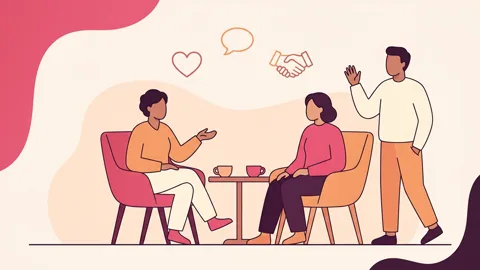
In any intimate relationship, consent is the foundational agreement that makes closeness and vulnerability possible. But when you open that relationship to include other people, the simple idea of a single 'yes' quickly becomes more layered. This article explores why real consent in non-monogamy is not a checkbox—it’s a living, breathing conversation that evolves with every new partner, boundary, and emotional shift.
Key takeaways
- Consent is an ongoing, reversible process, not a one-time agreement.
- Non-monogamous relationships require specific, informed consent that covers multiple people and scenarios.
- Emotional reactions like jealousy are normal and can be cues to renegotiate, not signs of failure.
- Even in communities that value consent, violations happen—building a culture of accountability is essential.
- Practical tools like regular check-ins, specific language, and safewords help keep consent alive.
The Basics of Consent and Why They Still Apply
At its core, sexual consent means actively and voluntarily agreeing to participate in a sexual act with another person[5]. This agreement must be given freely, without coercion, manipulation, or impairment from substances, and it can be withdrawn at any moment[5]. Even in long-term committed relationships, consent needs to be obtained each time, because past yeses never imply future permission[5].
These fundamentals do not change when a relationship becomes non-monogamous. However, the practical application of consent becomes more intricate. In monogamy, consent is often framed around exclusivity: you agree to sexual and emotional intimacy with only one person. In consensual non-monogamy (CNM), you are actively allowing for connections outside that primary dyad, and the consent must encompass a wider array of activities, people, and emotional landscapes[2].
Why a Single 'Yes' Is Rarely Enough
The popular 'enthusiastic consent' model suggests that only an eager, unambiguous yes counts as real consent[5]. While this is a valuable baseline, many people—including asexual individuals, sex workers, and couples trying to conceive—may willingly participate in sex without feeling personal enthusiasm, and their consent remains valid[1]. Some critics have argued that demanding enthusiasm in every intimate moment can feel unrealistic and can alienate those whose experiences are already marginalized[1].
In non-monogamous dynamics, this nuance expands further. You might consent to a partner going on a date, only to feel a knot of discomfort when the evening arrives. That discomfort doesn’t necessarily mean the original consent was invalid, but it signals a need for ongoing conversation. Consent is fluid and changeable; even when a written agreement exists, checking in for enthusiastic consent as situations evolve is wise[1]. Consent educator Farrah Khan describes it as a continuing dialogue, one that involves deep listening to your partner[1].
Consent as the Defining Line in Non-Monogamy
Non-monogamy itself is categorized largely by whether all involved are aware and consenting[2]. Consensual non-monogamy (CNM)—sometimes called ethical non-monogamy—explicitly allows for extra-dyadic relationships with mutual knowledge and agreement[2]. In contrast, secretive non-monogamy, like infidelity, happens without that shared knowledge, and is universally associated with betrayal and broken trust across cultures[2].
Considering that about 20% of Americans have engaged in some form of CNM[4], it’s clear these are not rare arrangements. Yet the forms vary widely: swinging couples often seek sexual variety together, polyamorous folks nurture multiple romantic bonds, and open relationships let each partner pursue independent sexual connections[2]. In all these models, consent is not merely a one-time permission slip but an ongoing negotiation that reflects the fluid nature of desire and commitment.
When Consent Gets Complicated: Grey Areas and Law
Even with the best intentions, consent can become murky. The law in many places states that intoxicated individuals cannot legally consent[5]. Yet a Canadian legal expert notes that under Canadian law, a drunken consent can still be a valid consent[1]. This legal tightrope highlights why relying solely on a binary 'yes/no' is insufficient—context, capacity, and ongoing awareness matter deeply.
Some relationships, particularly those overlapping with BDSM, practice consensual non-consent (CNC), where partners mutually agree in advance to act as if consent has been waived for certain scenarios, often without knowing the exact activities planned[1]. This form of comprehensive pre-negotiated consent is intended to be irrevocable under most circumstances[1]. However, legal limits exist: for example, in Canada, a person cannot consent to receiving serious bodily injury during sexual activity[1]. These boundaries remind us that all consent is bounded by safety, law, and the recognition that even 'irrevocable' agreements can be a source of harm if not handled with extreme care.
Jealousy, Distress, and the Need to Renegotiate
Consent in non-monogamy is inseparable from emotional reactions like jealousy. A study comparing monogamous and CNM individuals found that monogamous folk reported greater overall distress at the idea of a partner’s outside involvement[3]. Interestingly, monogamous men were more distressed by sexual extradyadic involvement, while monogamous women were more distressed by emotional involvement, but only in consensual scenarios[3]. Among CNM participants, gender differences in distress vanished[3].
Within CNM, people often feel more protective of their primary partnership: they rated it more important that a primary partner not cheat, and reported more distress imagining that partner cheating compared to a secondary partner[3]. This suggests that consent doesn’t erase jealousy; it simply changes the terrain. When jealousy arises, it’s a cue to revisit agreements, not a failure of the relationship model. Openly discussing what feels threatening and renegotiating boundaries—while always honouring the reversible nature of consent—can strengthen rather than undermine trust.
Learning from Consent Violations
Unfortunately, even within CNM and BDSM communities that emphasize consent, violations occur. One survey of 67 adults who experienced a consent incident in a BDSM or non-monogamous setting revealed a range of experiences, including issues with scene negotiation and outright sexual assault[4]. The narratives highlighted valuable lessons, such as the necessity of clear pre-encounter communication and the importance of seeking support from one’s community[4].
These stories underline that consent systems fail when power differentials, unclear boundaries, or cultural stigma prevent people from speaking up. A robust consent culture therefore requires not just personal agreements but also community norms that encourage reporting, education, and swift accountability[4]. It also reinforces why the 'enthusiastic' model is only a starting point: consent must be informed, reversible, specific, and never assumed from past behaviour or attire[5].
Practical Tools for Living Consent in CNM
Start by normalizing regular check-ins. Instead of a one-time boundary talk, schedule relaxed, low-pressure moments to ask each other: 'How are you feeling about our agreements? Is there anything that needs adjusting?' These conversations can touch on sexual health practices, emotional needs, and any new people entering the picture.
Use specific language when giving consent. Saying yes to a partner’s date might mean different things to each person; clarify details like 'I’m comfortable with you having dinner and kissing, but I’d like us to discuss before anything escalates to sex.' This specificity honours the principle that consent to one act is not blanket consent to others[5].
Practice accepting a changed mind without punishment. If a partner withdraws consent about a particular person or activity, treat it as valuable information rather than a setback. This builds the emotional safety needed for honest future conversations, especially when jealousy or insecurity surfaces.
For those who engage in BDSM or CNC play, consider using safewords or pause signals even in long-established relationships. Consent can be given non-verbally in BDSM[1], which reminds us that consent can take many forms; the crucial part is that everyone involved understands and respects the ways of saying stop or slow down.
Finally, educate yourself on the legal and health implications of your agreements. While alcohol-involved consent may be legally valid in some jurisdictions, it often raises consent capacity questions that can harm relationships[1][5]. For medical risks, consult a qualified clinician who is familiar with non-monogamous relationship structures.
Frequently asked questions
Does consent need to be enthusiastic to be valid?
Not always. While enthusiasm is a strong indicator, many people—including asexual individuals and sex workers—legitimately consent without personal desire. What matters most is that the agreement is freely given, informed, and reversible[1][5].
Can someone who is drunk legally consent?
Laws vary. Many jurisdictions hold that an intoxicated person cannot consent, but Canadian law, for instance, recognizes that a drunken consent can still be a consent[1]. Regardless of legality, if someone’s judgment is impaired, it’s safer to wait until they are sober for both emotional and physical well-being[5].
Is consensual non-consent (CNC) compatible with safe consent practices?
Yes, for some. CNC involves detailed pre-negotiation and mutual agreement to act as if consent has been waived. It works only with deep trust, thorough communication, and awareness of legal limits—such as the fact that you cannot consent to serious injury in many places[1]. It requires ongoing education and safety measures like safewords.
How often should we revisit our relationship agreements?
There’s no fixed schedule, but checking in when new people enter the picture, after any intense emotional experience, or simply during a calm monthly talk can help. The goal is to keep consent a live conversation, not a static rulebook.
Sources
- Sexual consent – Wikipedia. https://en.wikipedia.org/wiki/Sexual_consent
- Non-monogamy – Wikipedia. https://en.wikipedia.org/wiki/Non-monogamy
- Mogilski et al. (2019). Jealousy, Consent, and Compersion Within Monogamous and Consensually Non-Monogamous Romantic Relationships. Archives of sexual behavior. PubMed. https://pubmed.ncbi.nlm.nih.gov/30607710/
- Ling et al. (2022). BDSM, Non-Monogamy, Consent, and Stigma Navigation: Narrative Experiences. Archives of sexual behavior. PubMed. https://pubmed.ncbi.nlm.nih.gov/34997400/
- What Is Sexual Consent? – Planned Parenthood. https://www.plannedparenthood.org/learn/relationships/sexual-consent
Facts in this article were taken from the sources above and rewritten in our own words. See our editorial policy. Found an error? Tell us.