How to Find a Third: Respectful Ways to Meet a Partner
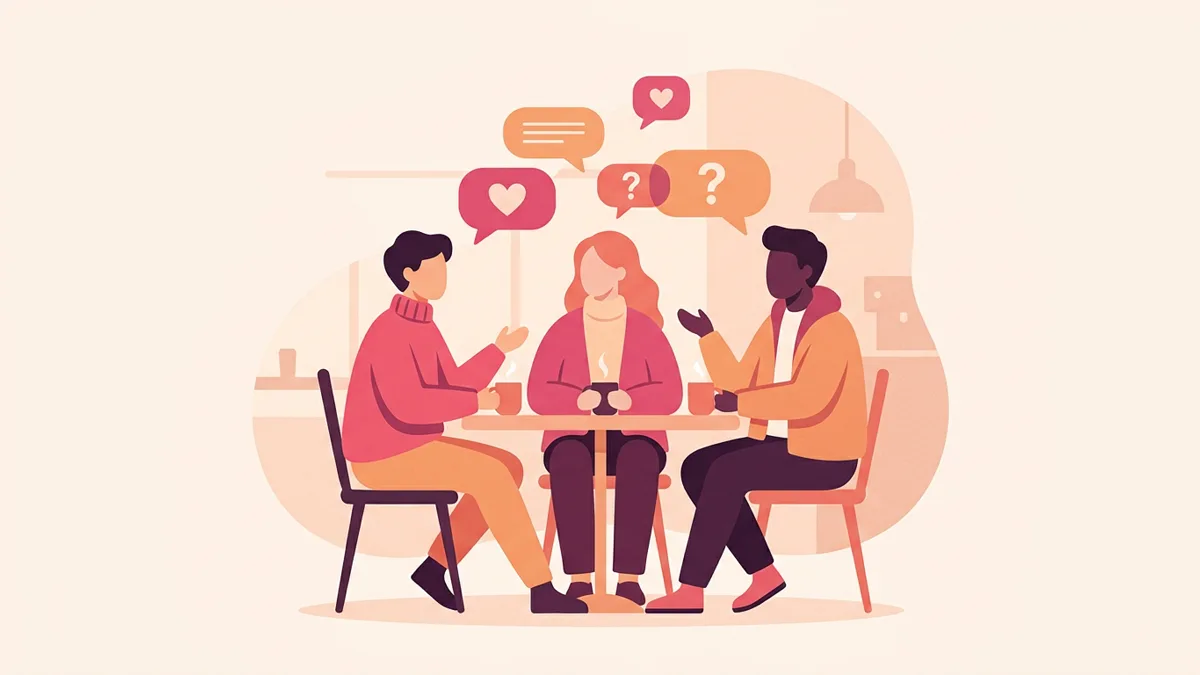
Opening up a relationship to include a third person can be an exciting and fulfilling journey, but it requires thoughtfulness, clear communication, and a commitment to treating everyone involved with respect. Whether you're looking for a one-time shared experience or a lasting romantic triad, the way you approach potential partners matters deeply. This guide walks you through the practical and emotional steps to find a third in ways that honor consent, safety, and genuine connection.
Key takeaways
- Clarify whether you want a threesome, a throuple, or another form of non-monogamy before you start looking.
- Treat a third person as a full partner, not an accessory; avoid unicorn hunting and unfair rules like veto power.
- Use online dating thoughtfully, with an honest profile and strong safety practices.
- Prioritize open communication and regular check-ins to nurture all relationships involved.
- Adding a person won't fix a struggling relationship; do the internal work first.
Defining What You Want: Threesome, Throuple, or Something Else?
Before you start searching, get crystal clear on what you're actually seeking. A threesome is a sexual encounter involving three people, where at least one person engages physically with both others[1]. It's a common fantasy—in one 2017 US survey, 34.1% of men and 11.1% of women found the idea at least somewhat appealing[1]—and it's often depicted in media and pornography[1]. But a threesome is explicitly sexual and may be a one-time event.
A throuple, on the other hand, is an ongoing romantic relationship among three people who have all consented to be in a loving partnership together[4]. Sometimes called a triad or closed triad, a throuple involves feelings, romance, and daily life, not just sex[4]. Throuples can be open (sex outside the relationship is allowed) or closed (all intimacy stays within the three)[4].
There's also the broader landscape of polyamory—maintaining multiple relationships with everyone's knowledge and consent[5]—which might include configurations beyond a triad. Ask yourself: Are you looking for a shared sexual adventure, or do you want a full-blown romantic relationship? Your answer will shape every next step.
Avoiding Unicorn Hunting and Other Unethical Approaches
In polyamorous communities, the term 'unicorn hunting' often describes a heterosexual couple seeking a bisexual woman to join their relationship, usually with a set of restrictive rules that prioritize the original couple. This approach frequently relies on a prescriptive primary/secondary structure, where the existing partners hold more power, emotional intensity, and decision-making authority[5]. Such hierarchy can leave the new person feeling unappreciated or disposable[5].
Common pitfalls include veto power, where one member of the original couple can unilaterally end the third person's relationship with the other[5]; a one penis policy, which allows a man to have multiple female partners but forbids those partners from seeing other men[5]; and don't ask, don't tell arrangements, where outside relationships happen in secret[5]. Many experienced polyamorous people avoid DADT because it can breed dishonesty and anxiety[5].
If you're part of an existing couple, reflect on whether you're truly ready to treat a new person as an equal partner. A throuple isn't a couple plus a guest star—it's four interconnected relationships: each pair and the group as a whole[4]. Be prepared for your original relationship to undergo a complete shift[4].
Where to Meet Potential Partners
Online dating is one of the most common ways to connect with people interested in non-monogamous arrangements. Dating apps and websites allow you to create a profile with details like age, gender, orientation, location, and appearance, and then message potential matches[2]. In a 2022 Pew Research Center survey, 53% of online dating users said their experiences were very or somewhat positive[2]. However, the same survey found that 49% of respondents felt dating apps were not too safe or not at all safe, while 48% considered them very or somewhat safe[2]. So while apps can be effective, they require caution.
Beyond apps, consider attending polyamory meetups, LGBTQ+ events, or workshops on ethical non-monogamy. These spaces often attract people who are already familiar with the values of consent and open communication. Social media groups and forums dedicated to polyamory can also be a starting point, though they may require more vetting.
Wherever you look, be upfront about your intentions. If you're a couple, state that clearly. If you're solo and seeking to join an existing pair or form a triad, say so. Ambiguity wastes everyone's time and can lead to misunderstandings.
Creating an Honest and Respectful Profile
Your dating profile is your first impression. Use recent photos that show you as you are, and write a bio that reflects your personality and what you're looking for. Honesty is crucial because deception is a known risk in online dating[3], and studies have found that nine out of ten online dating participants have lied on at least one attribute, with weight being the most common fib and age the least[2].
If you're part of a couple, include pictures of both of you and describe the dynamic you're hoping to create. Avoid language that treats a third person like a fantasy fulfillment object. Instead of 'we're looking for a fun third to spice things up,' try 'we're a loving couple hoping to meet someone who's open to building a genuine connection with both of us, at a pace that feels comfortable for everyone.'
Be clear about boundaries and expectations. Are you seeking only a sexual encounter, or are you open to romance? Do you have agreements around safer sex, time commitments, or emotional involvement? Sharing these upfront helps filter for compatible people and shows that you've thought things through.
Safety First: Protecting Yourself When Meeting New People
Meeting someone from the internet always carries some risk. Research with college women found that over 60% reported a history of sexual victimization, and they identified risks like unsafe sexual situations, deception, and non-sexual interpersonal violence when using dating apps[3]. The good news is that they also reported using a variety of protective strategies: logistical (choosing public meeting spots), investigative (checking social media or doing background searches), social (letting friends know where they are), instinctual (trusting gut feelings), and safety planning (having an exit strategy)[3].
Apply these strategies regardless of your gender. Always meet in a public place for the first time, like a café or park. Tell a trusted friend where you're going and share your date's profile or contact information. Consider a video call before meeting in person to verify identity and get a sense of the person. Trust your instincts—if something feels off, it's okay to cancel or leave.
Be aware that scam accounts are common on dating platforms; in a 2022 survey, 52% of online dating users believed fake profiles were widespread[2]. Some companies have even been fined for using fabricated profiles to lure users into paid memberships[2]. Stick to reputable apps, and never send money or sensitive personal information to someone you haven't met.
Communicating Expectations and Boundaries
Once you've made a connection, the real work begins. Open, ongoing communication is the backbone of any ethical non-monogamous arrangement. Discuss what each person wants from the experience: Is this a one-time threesome, or are you all open to it evolving into a throuple? How will you handle safer sex practices? It's wise to talk to a qualified clinician about sexual health and testing.
If you're moving toward a throuple, remember that you're nurturing four distinct relationships: the three one-on-one bonds and the group dynamic[4]. Each needs attention and care. Schedule regular check-ins where everyone can voice feelings, concerns, and joys without judgment.
Be honest about any existing agreements in a preexisting couple. If you have a veto arrangement or a hierarchy, disclose it early so the new person can decide if they're comfortable with that. Many people in the polyamorous community are wary of such structures because they can lead to heartbreak[5]. Consider whether you're willing to renegotiate those agreements to create a more equitable foundation.
Nurturing the Connection: From First Date to Ongoing Relationship
If you're building a throuple, resist the urge to rush. Let each relationship develop at its own pace. One-on-one dates are just as important as group time, allowing individual bonds to deepen naturally. Avoid comparing relationships or expecting everyone to feel the same level of intensity at the same time.
Be mindful of couple privilege. Even with the best intentions, an established pair can unconsciously dominate decisions about holidays, living arrangements, or emotional priorities. Solo polyamory, which emphasizes autonomy and doesn't seek couple-centric relationships, offers an alternative model where no one is automatically secondary[5]. While you don't have to adopt solo poly, its principles can remind you to respect each person's independence.
Expect challenges. Adding a third person will not fix underlying issues in a two-person relationship; in fact, it will likely magnify them[4]. If you're hoping a throuple will solve problems like boredom or lack of intimacy, pause and address those first. Seek out resources, books, or a therapist familiar with non-monogamy to support your journey.
Common Pitfalls and How to Steer Clear
Many missteps come down to poor partner selection—what some call a 'picker problem'[5]. You might be drawn to someone who is exciting but fundamentally incompatible with your relationship style. Take time to assess whether a potential third shares your values around communication, consent, and commitment.
Don't fall into the trap of a don't ask, don't tell policy. While it might seem like a way to avoid jealousy, DADT often creates an environment of secrecy that erodes trust[5]. Similarly, a one penis policy is usually rooted in insecurity and double standards, and it can be deeply hurtful to everyone involved[5].
Finally, keep asking yourself the hard questions. Why do you want a third? Is it because you genuinely have love and connection to offer, or are you trying to patch a hole in your existing relationship? As sex educator Lateef Taylor notes, before bringing up a throuple with a current partner, you should examine whether a throuple is truly what you want versus another form of open or polyamorous relationship[4]. Honest self-reflection is the most respectful thing you can do for everyone.
18+ only: related videos on our sister site threesomio.com (adult content).
Frequently asked questions
What's the difference between a threesome and a throuple?
A threesome is a sexual encounter among three people, while a throuple is an ongoing romantic relationship where all three are committed to each other emotionally and often in daily life. Threesomes can be one-time events, whereas throuples involve love, romance, and shared responsibilities.
Is it okay for a couple to look for a third person together?
Yes, but it's important to do so ethically. Avoid treating the third person as an experiment or a temporary addition. Be upfront about your existing relationship dynamics, and be willing to renegotiate rules that create inequality, such as veto power or a one penis policy.
How can I stay safe when meeting someone from a dating app?
Meet in a public place, tell a friend your plans, consider a video call first, and trust your instincts. Research suggests using logistical, social, and safety planning strategies can reduce risks. Also, be aware that fake profiles and scams are common on dating platforms.
Can a throuple work if one person is new to non-monogamy?
It can, but it requires patience, education, and a lot of communication. The new person should be given space to learn and express their needs without pressure. All parties should be prepared for the original relationship to shift significantly, and underlying issues should be addressed beforehand.
Sources
- Threesome – Wikipedia. https://en.wikipedia.org/wiki/Threesome
- Online dating – Wikipedia. https://en.wikipedia.org/wiki/Online_dating
- Newlands et al. (2022). Safe Dating in the Digital Era: Protective Behavioral Strategies in Dating Behaviors Facilitated by Dating Applications. Violence and victims. PubMed. https://pubmed.ncbi.nlm.nih.gov/35354656/
- 10 FAQs About Being in a Throuple: Definition, Dynamic, and MoreHealthline – Healthline. https://www.healthline.com/health/relationships/throuple
- More Than Two – More Than Two. https://www.morethantwo.com/polyglossary.html
Facts in this article were taken from the sources above and rewritten in our own words. See our editorial policy. Found an error? Tell us.