How to Talk to Your Partner About Opening Up
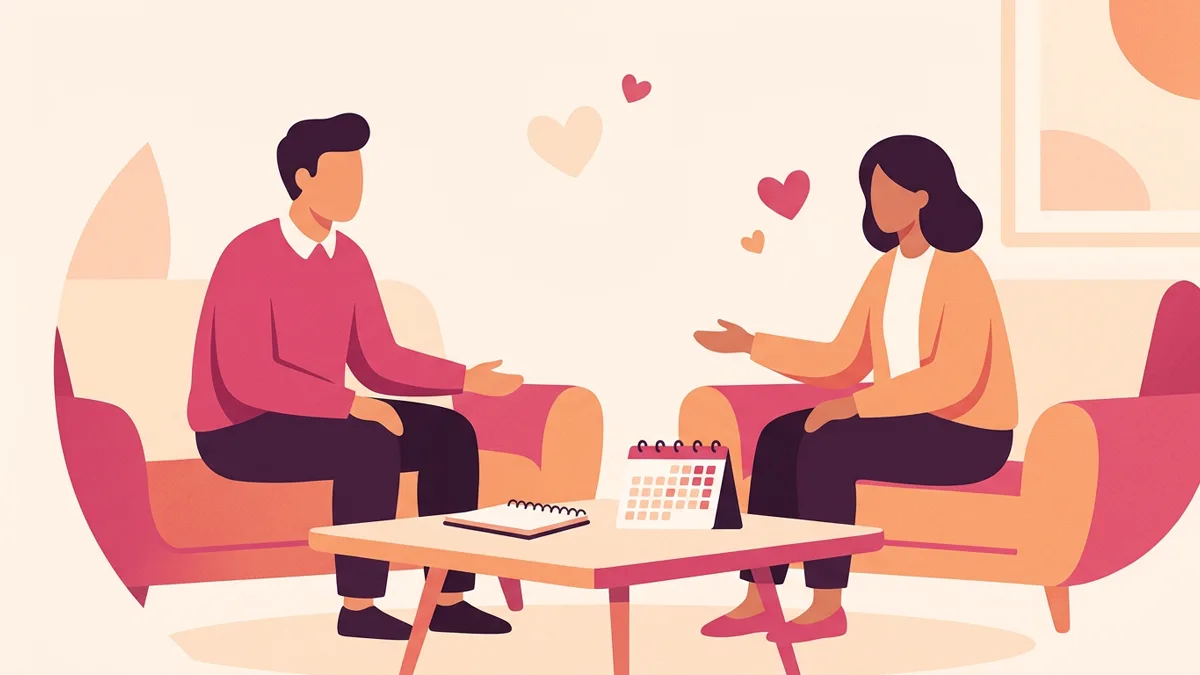
Bringing up the desire to open a relationship can feel daunting. It challenges deeply ingrained ideas about love and commitment, and it requires vulnerability from both partners. Yet with thoughtful preparation and compassionate communication, this conversation can deepen trust—regardless of the outcome.
Key takeaways
- Clarify your own desires and motivations before starting the conversation.
- Choose a calm, private time and frame the talk as an invitation, not an ultimatum.
- Discuss practicalities like boundaries, jealousy, time management, and safer sex.
- Give your partner space to react and consider professional support if needed.
- Ongoing, honest communication is the cornerstone of any relationship, open or not.
Before You Say a Word: Self-Reflection
Before you approach your partner, get clear on your own motivations. Are you craving more freedom, intellectual variety, or a different kind of connection? People consider open relationships for many reasons, including a desire for companionship, sexual variety, or personal growth[1]. Understanding your 'why' will help you articulate it without defensiveness.
Reflect on your relationship history and your capacity for jealousy. Open relationships can stir up possessiveness, but they also offer a chance for greater self-awareness[1]. Think about how you've handled jealousy in the past, and consider the skills you might need to strengthen, such as honest communication and taking responsibility for your own emotions[1].
It may also help to recognize that consensual non-monogamy is not a new trend. The concept of open relationships has been discussed since the 1970s[1]. Knowing this can ease the feeling that you're proposing something outlandish.
Choosing the Right Time and Place
Timing matters. Choose a private, calm moment when neither of you is rushed, exhausted, or dealing with a crisis. Avoid bringing it up during an argument or right before a major life event. A quiet evening at home, a long walk, or a relaxed weekend morning can set a more receptive tone.
Make sure you have enough time for a full conversation—and for the silence or emotions that may follow. This is not a talk to squeeze in between errands.
Framing the Conversation with Care
Start with 'I' statements that center your feelings rather than your partner's shortcomings. For example, 'I've been thinking about what it might be like to explore connections outside our relationship, and I wanted to share that with you.' This frames it as an invitation to dialogue, not a demand.
Reassure your partner of your love and commitment. A common stereotype is that people in open relationships are less devoted or mature[1], so your partner may worry that you're pulling away. Explicitly state that this conversation comes from a place of wanting more honesty, not less closeness.
Acknowledge the cultural headwinds. Most of us grew up with stories that equate love with finding 'the one.' Popular media, like the long-running sitcom How I Met Your Mother, revolves around a protagonist's years-long quest to meet his future wife[2]. When you bring up opening up, you're gently pushing against a powerful narrative. Naming that can help your partner understand why the idea might feel jarring.
Remember that many couples consider open relationships but ultimately decide against them[1]. The goal of this first talk is simply to share your thoughts and hear theirs—not to reach a decision immediately.
Key Topics to Explore Together
If the conversation moves forward, you'll need to discuss practical and emotional logistics. Research on maintaining multiple relationships highlights several areas that deserve attention[4]. Here are some to consider:
- Boundaries: Physical, sexual, and emotional boundaries help everyone feel safe[1]. What kinds of connections are okay? What feels off-limits?
- Jealousy: Jealousy is common in all relationship styles. In one older study, 80% of participants in open marriages reported experiencing jealousy[1]. Talk about how you'll handle it when it shows up—perhaps through open communication, which is a key maintenance practice[4].
- Time and resources: Sharing time, money, and living space can get complicated, especially if you live together or have children[1]. Discuss how you'll manage schedules and ensure your primary relationship still gets nourishment. Some couples find a shared digital calendar helpful[7].
- Safer sex: Sexual health maintenance is a recognized part of consensual non-monogamy[4]. Agree on testing frequency, barrier use, and how you'll disclose new partners.
- Hierarchy and veto: Will you have a primary partnership with veto power over new connections, or will you aim for non-hierarchy? These are common negotiation tools[1].
- Compersion: This is the practice of feeling joy in your partner's joy with others[4]. It's not a requirement, but many people find it helpful to cultivate.
- Reputation management: Decide together how open you'll be with friends, family, and coworkers[4]. Stigma is real—research shows that people often perceive consensually non-monogamous relationships as less ethical and lower in quality[5]—so you may want to be selective about whom you tell.
Navigating Your Partner's Reaction
Your partner may need time to process. They might feel shock, sadness, or fear. That's okay. The most successful open relationships tend to be those that take longer to establish, giving both people space to self-reflect and cope with change[1].
Avoid pushing for an immediate answer. Instead, invite them to ask questions and express their concerns. If the conversation becomes too heated, agree to pause and revisit it later.
If you find yourselves stuck, consider seeing a couple's therapist. A poly-friendly professional can help you build the communication skills needed for these discussions[7]. Therapy isn't a sign of failure; it's a tool for clarity.
Be prepared for the possibility that your partner may never want an open relationship. Some monogamous partners are comfortable with their partner dating others, but many are not[7]. Respecting that boundary is essential. Coercion has no place in ethical non-monogamy[1].
From Talk to Action: Taking It Slow
If you both agree to explore, start with small, reversible steps. You might read a book together, listen to podcasts, or attend a local discussion group. Some couples find it useful to adapt a structured conversation framework, like the pre-cohabitation discussions recommended for moving in together, which cover relationship negotiations, household rules, and communication[6]. You can create your own set of prompts to work through.
Set a trial period with regular check-ins. Use these moments to share what's working and what feels uncomfortable. Skills like self-awareness, honesty, and boundary-setting are not one-time achievements; they require ongoing practice[1].
A digital calendar can be a surprisingly powerful tool for managing multiple relationships, helping everyone see commitments at a glance[7].
Remember that consent is continuous. You can always renegotiate or close the relationship if it's not serving you both.
When One Partner Is Monogamous
Sometimes one person wants to remain monogamous while the other explores outside connections. These mono-poly relationships can work, but they demand extra care. Communication and consent remain the foundation[7].
Be honest about what you each need. Some monogamous partners find they don't want to date others themselves but are genuinely fine with their partner doing so[7]. Others may struggle. There's no single right way.
A word of caution: opening up is not a fix for a relationship damaged by infidelity. When a mono-poly arrangement is used to 'save' a relationship after cheating, it can become codependent[7]. Start from a place of trust, not repair.
If you're the polyamorous partner dating someone who has only been monogamous before, be patient. Different polyamorous people have different boundaries around dating newcomers, so discuss expectations openly[7].
Ongoing Communication and Maintenance
The conversation doesn't end once you open up. In fact, consensual non-monogamy often requires more communication, not less[7]. Regular check-ins help you adjust boundaries, process jealousy, and celebrate what's going well.
Practices like disclosing new attractions, talking openly about jealousy, and cultivating compersion are part of the day-to-day work of maintaining multiple relationships[4].
It can be reassuring to know that many people navigate this successfully. Public figures like Bethany C. Meyers and Nico Tortorella have spoken about their polyamorous marriage, showing that it's possible to build a life that honors multiple connections[3].
Ultimately, the goal is a relationship where both partners feel seen, respected, and free to be themselves—whatever shape that takes.
Frequently asked questions
What if my partner says no?
A no must be respected. Some couples revisit the conversation later, but coercion undermines trust. You may need to decide whether the relationship can work for you as it is, possibly with the help of a therapist.
How do we handle jealousy?
Jealousy is normal and can be managed through open communication, self-reflection, and clear boundaries. Many people in open relationships experience jealousy, but they work through it by talking honestly and taking responsibility for their own emotions[1][4].
Should we see a therapist before opening up?
A poly-friendly therapist can be very helpful, especially if communication is difficult. They can guide you through the conversation and help you build the skills needed for consensual non-monogamy[7].
Can a monogamous person be happy with a polyamorous partner?
Yes, some mono-poly relationships thrive when both partners communicate openly and respect each other's needs. However, it's not for everyone, and it's important to avoid using it as a bandage for deeper issues like infidelity[7].
Sources
- Open relationship – Wikipedia. https://en.wikipedia.org/wiki/Open_relationship
- How I Met Your Mother – Wikipedia. https://en.wikipedia.org/wiki/How_I_Met_Your_Mother
- Bethany C. Meyers – Wikipedia. https://en.wikipedia.org/wiki/Bethany_C._Meyers
- Mogilski et al. (2026). How Do People Maintain Consensual Non-Monogamy? An International Development and Validation of the Multiple Relationships Maintenance Scale. Archives of sexual behavior. PubMed. https://pubmed.ncbi.nlm.nih.gov/41840193/
- Selterman et al. (2025). Moral Judgment Toward Individuals in Consensually Non-Monogamous Relationships as a Function of Moral Foundations and Disgust Sensitivity. Archives of sexual behavior. PubMed. https://pubmed.ncbi.nlm.nih.gov/40622498/
- Brown et al. (2023). Pre-Cohabitation Conversations for Relationships: Recommended Questions for Discussion. Contemporary family therapy. PubMed. https://pubmed.ncbi.nlm.nih.gov/34276131/
- Your Guide to Polyamorous RelationshipsHealthline – Healthline. https://www.healthline.com/health/relationships/polyamorous
Facts in this article were taken from the sources above and rewritten in our own words. See our editorial policy. Found an error? Tell us.