Metamours: Getting Along With Your Partner's Other Partners

A metamour is your partner's other partner, sometimes called an other significant other or OSO[1]. There is no single right way to relate to a metamour; some people become close, some stay casual, and some never meet[1]. This article explores what research and lived experience suggest about metamour relationships, including benefits, difficulties, and practical ways to build a dynamic that works for everyone involved.
Key takeaways
- A metamour is your partner’s other significant other, and there is no single correct way to relate to one[1].
- Healthy metamour connections can support compersion, practical help, and a stronger sense of chosen family[3][4][5].
- Jealousy, time scarcity, and meta conflict are common challenges, but open communication and clear agreements can reduce friction[3][6][8].
- Parallel distance is a valid choice when it is chosen with honesty and respected by the hinge partner[1].
- Closeness with a metamour and knowing about their relationship with your shared partner tend to predict compersion, while jealousy, envy, and attachment anxiety work against it[5].
What a Metamour Is—and Why the Connection Matters
In polyamory, a metamour is the person your partner is also involved with[1]. The term is often interchangeable with other significant other, or OSO[1]. The emotional shape of this connection varies widely; some metamours become close friends, some are pleasant acquaintances, and some choose never to meet[1]. Rather than following a universal script, the people involved decide what level of contact feels sustainable[1].
Many polyamorous people work to see a partner's other relationship as something that enriches that partner’s life rather than as a threat to their own[1]. That shift in perspective can make a metamour feel less like a rival and more like a person whose happiness is connected to someone you love.
When the bond between metas is genuinely warm, some people describe the network as polyaffective[7]. Dr. Elisabeth Sheff has noted that close ties among metamours who become chosen relatives can serve as the backbone of a poly family[7]. That does not mean every metamour bond must reach this level, only that such closeness is one possible and meaningful outcome.
Styles of Metamour Contact: From Kitchen Table to Parallel
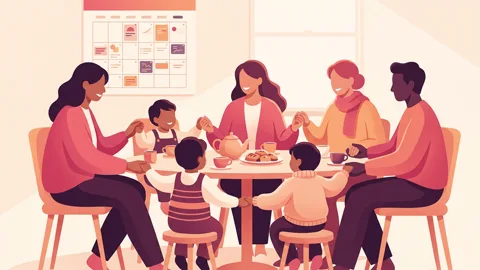
Some polycules lean toward kitchen table polyamory, where everyone involved is comfortable enough to gather around the same table and share important moments as a large group[1]. Others prefer parallel polyamory, where people in different relationships choose less contact or fewer details about each other[1]. Neither style is better by default; they reflect different needs for privacy, time, and social energy.
A vee is a common structure in which one person has two separate romantic or sexual partners, and those two partners are not involved with each other[8]. In that arrangement, the two metas may be warm, distant, or shift over time. Within a larger poly web, also called a polycule or poly family, people are connected through their relationships even when they are not all romantically involved[8].
If you are unsure where you stand, it can help to ask yourself a few questions: How much do you want to know about a metamour? How much are you comfortable having shared about your own relationship? What level of contact would feel respectful when birthdays, health issues, or household responsibilities overlap?
Real Benefits of Healthy Metamour Relationships
Research on the perceived impacts of a partner’s other relationships offers a balanced picture. In interviews with 51 people who practice consensual non-monogamy, participants described both upsides and downsides[3]. On the positive side, some reported compersion, a warm or glad feeling when an intimate partner enjoys another relationship[3][1]. Others appreciated that their partner’s needs were being met elsewhere, noticed their own relationship felt stronger, or found their interactions with a metamour pleasant or useful[3]. A few also described personal growth that came from sharing partners with others[3].
A later quantitative study involving 255 people recruited from online CNM communities found that feeling closer to a metamour and knowing more about the partner’s relationship with that metamour were both linked with greater compersion[5]. Jealousy, envy, and attachment anxiety were linked with less compersion[5]. This suggests that reducing those difficult feelings and building a more secure connection can make room for positive emotions to grow[5].
Cooperation between metamours is not a recent invention. An analysis of letters, biographies, and archives from roughly fifty well-known Western intellectual and artistic figures after the Enlightenment, including Virginia Woolf, Frida Kahlo, and Victor Hugo, found repeated examples of a person’s partners helping each other with material support, social connection, and emotional care[4]. Some of this history has been ignored or misread, but it shows that collaborative metamour bonds have deep roots and may point toward more cooperative ways of organizing intimacy, family, and community[4].
What Makes Metamour Dynamics Hard
The same interview study of 51 people also identified clear costs. Participants mentioned difficult feelings such as jealousy, getting less of a partner’s time than they wanted, conflict within their own relationship, or friction caused by interactions between metamours[3]. These benefits and costs often mirror one another, as if they are the positive and negative sides of the same basic features of non-monogamy[3].
Jealousy is common and can involve multiple people at once. In a content analysis of 763 open-ended responses from 219 individuals currently in a polyamorous relationship, jealousy was one of the most frequently reported challenges, mentioned by 35.2% of participants[6]. It can show up as your own feelings, a partner’s discomfort, or a metamour’s reactions[6].
When metas cannot stand each other and never reach basic comfort in each other’s presence, long-term happiness is harder to sustain[7]. That does not mean everyone must be best friends. But ongoing hostility or unspoken avoidance without an agreement can exhaust the shared partner and strain the wider network.
Everyday Maintenance Practices That Touch Metamour Life
A factor analysis of a scale created to measure how people maintain consensual non-monogamy identified nine practices[2]. The full list includes being honest about attractions, talking openly about jealousy, feeling compersion, willingness to help care for children who are not one’s own, sharing sexual experiences, deciding how much hierarchy to apply among partners, maintaining sexual health, distributing time and resources fairly, and managing how the relationship looks to others[2].
In a survey of 871 people, each of these practices showed its own pattern of links to how people felt about their relationships and sex lives, how invested and interdependent they were with partners, and how often they reported being unfaithful[2]. In other words, the way a polycule handles honesty, time, and jealousy can ripple into the metamour bond even when the metas are not the ones in a direct romantic relationship.
For metamour dynamics specifically, small acts of reliability can help. That may mean being truthful about schedules, not hiding relevant sexual health information, sharing difficult feelings without accusing another person, and letting a partner own their choices rather than using a meta as a scapegoat.
Practical Ways to Build a Respectful Metamour Connection
Some metas acknowledge each other on Metamour Day, which is celebrated each year on February 28[1]. Some choose to exchange small gifts[1]. This is optional and only meaningful if it matches the desires of everyone involved.
- Ask your partner what kind of contact their other partner actually wants, and do not assume that silence means dislike.
- If a meeting feels welcome, keep it low-pressure and time-limited, such as coffee, a short walk, or a shared task rather than a major celebration.
- Agree on how much information gets shared between households. Some people want to know about travel, illness, or schedule changes; others prefer less detail.
- Use a shared digital calendar when possible. A digital calendar that lets partners view schedules side by side can reduce the work of planning time together[8].
- If compersion feels far away, start smaller: notice a metamour supports your partner in ways that also make your life easier, such as helping with a difficult day.
When Distance Is the Healthier Choice
Parallel polyamory is a legitimate preference, not a sign of failure. Some people feel safer or more relaxed with limited contact and fewer details about a partner's other relationships[1]. The available guidance says there is no single way to do this, and the people involved get to choose what works for them[1].
If you choose more distance, the shared partner—often called the hinge—needs to manage information, schedules, and agreements fairly. That may mean not repeating one partner’s complaints to the other, not double-booking the same evening, and taking responsibility for choices instead of blaming a metamour.
If jealousy, envy, or anxiety persist, talking with a qualified clinician or counsellor who understands consensual non-monogamy can be helpful. Research suggests that reducing jealousy and envy and building a more secure attachment style may increase compersion over time[5].
Keeping Respect at the Center
Respect, trust, and honesty for everyone involved are common values in polyamory[1]. Ideally, a partner’s other partners are accepted as part of that person’s life rather than merely tolerated[1]. Acceptance does not mean you have to like your metamour or share every holiday together. It means treating them as a real person with their own needs, boundaries, and relationship with someone you care about.
Clear communication, realistic expectations, and a willingness to revisit agreements over time often do more good than forcing closeness that is not there. Metamour relationships can change. Two people who wanted distance at first may become friendlier after navigating a difficult season together, while others may shift from close contact to more privacy.
Checking in periodically with yourself and your partners can help you notice when a boundary needs adjusting, when a routine no longer works, or when a small act of care could improve a tense dynamic. The goal is not a perfect metamour bond but a clear, honest, and workable one for everyone involved.
Frequently asked questions
Do I have to be friends with my metamour?
No. Some metamours are close friends, some are casual acquaintances, and some never meet[1]. What matters is that the people involved choose a level of contact that feels honest and workable, rather than forcing a friendship out of guilt.
What if I feel jealous of my metamour?
Jealousy is one of the most common challenges in polyamory and can involve your own feelings, a partner’s discomfort, or a metamour’s reactions[6]. It helps to talk about it openly without blaming the other person, and to remember that closeness with a metamour and knowing more about their relationship with your shared partner are both linked with greater compersion[5].
Is parallel polyamory less healthy than kitchen table polyamory?
Not inherently. Parallel polyamory involves a preference for less contact or less shared detail, while kitchen table polyamory involves more group comfort and time together[1]. Both can be healthy when the people involved are honest and the agreements fit their actual needs.
What is Metamour Day?
Metamour Day is celebrated every year on February 28 and honors the relationships people have with their metamours[1]. Some people mark it with a small gift or note, but it is entirely optional and only makes sense when it feels welcome.
Sources
- Polyamory – Wikipedia. https://en.wikipedia.org/wiki/Polyamory
- Mogilski et al. (2026). How Do People Maintain Consensual Non-Monogamy? An International Development and Validation of the Multiple Relationships Maintenance Scale. Archives of sexual behavior. PubMed. https://pubmed.ncbi.nlm.nih.gov/41840193/
- Arter & Bunge (2024). Perceived Impacts of Partners' Other Relationships on Oneself in Consensual Nonmonogamy. Archives of sexual behavior. PubMed. https://pubmed.ncbi.nlm.nih.gov/38438814/
- Watson & Stein Lubrano (2021). "Storming then Performing": Historical Non-Monogamy and Metamour Collaboration. Archives of sexual behavior. PubMed. https://pubmed.ncbi.nlm.nih.gov/34031779/
- Flicker & Sancier-Barbosa (2024). Your Happiness Is My Happiness: Predicting Positive Feelings for a Partner's Consensual Extra-Dyadic Intimate Relations. Archives of sexual behavior. PubMed. https://pubmed.ncbi.nlm.nih.gov/38177605/
- Boudreau et al. (2026). Time Management, Stigma, Jealousy, and More: A Content Analysis of the Challenges of Polyamory. Journal of sex & marital therapy. PubMed. https://pubmed.ncbi.nlm.nih.gov/42179042/
- More Than Two – More Than Two. https://www.morethantwo.com/polyglossary.html
- Your Guide to Polyamorous RelationshipsHealthline – Healthline. https://www.healthline.com/health/relationships/polyamorous
Facts in this article were taken from the sources above and rewritten in our own words. See our editorial policy. Found an error? Tell us.